
Back to Insights
Valiant Insights

Robots break records, but the decisive test begins with everyday tasks

The World Humanoid Robot Games show faster and more autonomous machines. Their real value, however, emerges when they connect cables, move materials, and recover from errors.

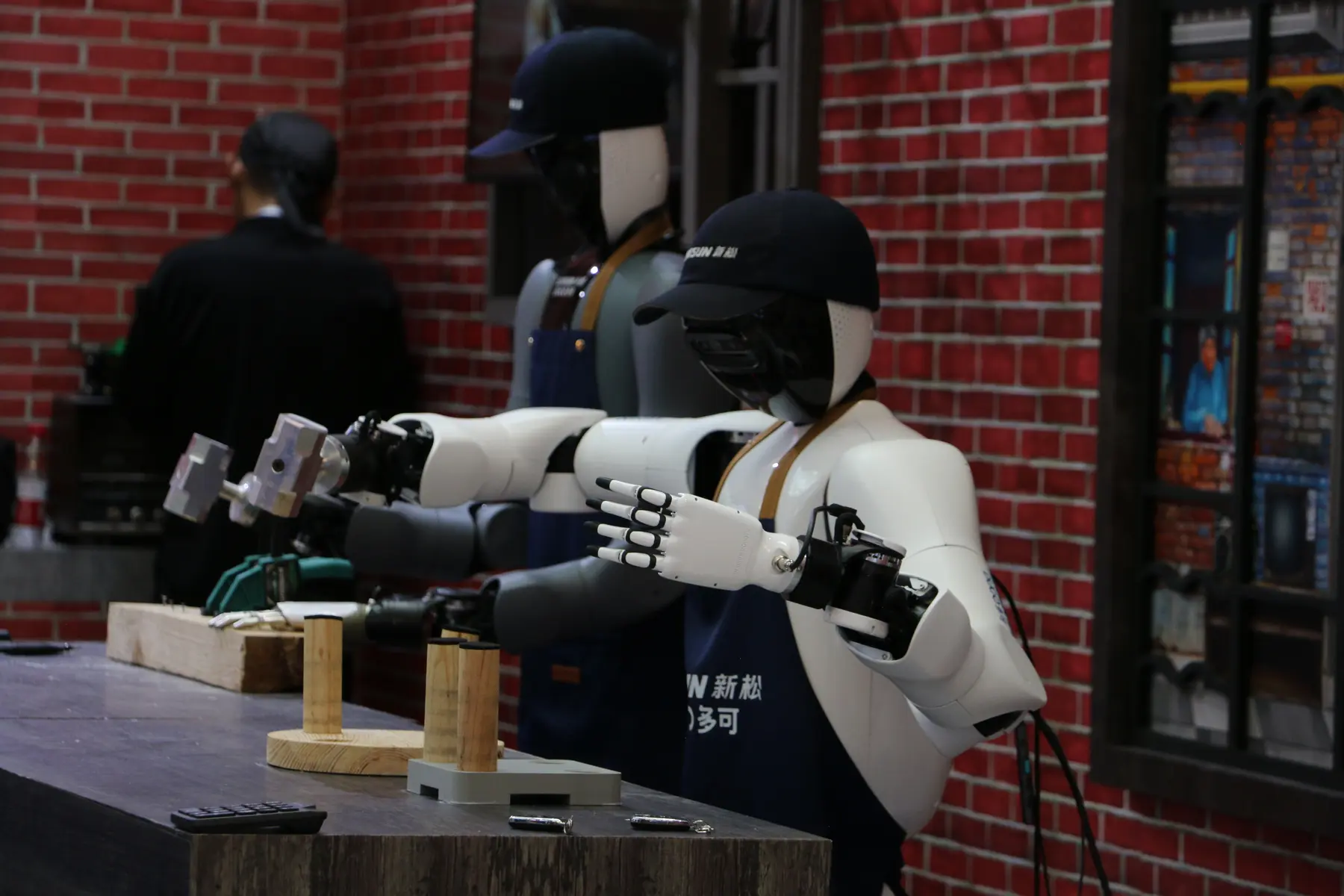
Humanoid robots perform a manipulation demonstration at an artificial intelligence event.
Xuthoria · Wikimedia Commons · CC BY-SA 4.0 · proportionally resized image
01

The spectacle shows how quickly performance is advancing

The World Humanoid Robot Games opened in Beijing with 2,056 robots from 666 teams across 51 events, according to the city government. The program combines races and sports with tasks inspired by factories, restaurants, offices, and emergency situations.

Reuters reported on August 23 that two robots completed the 100 metres faster than the 9.58-second human world record. Another model covered 400 metres in 39.7 seconds. The figures attract attention and show rapid progress in movement, energy management, and control.

02

The real challenge appears in small imperfections

Speed alone does not solve problems in the physical world. After the finish line, some robots still needed a padded barrier to stop. In everyday work, a cable at the wrong angle, a shifted box, or an object slightly out of reach can require perception, coordination, and error recovery.

More than 40% of the events require fully autonomous operation, according to information cited by Reuters. Tests include connecting cables, loading materials, handling warehouse operations, serving in restaurants, and responding to incidents. These less spectacular situations are where practical usefulness begins to be demonstrated.

03

Why this matters to organizations

For an organization, the lesson extends beyond humanoid robots. A controlled demonstration can reveal potential, but daily operations include incomplete data, changing environments, exceptions, and people with different needs.

Before expanding physical or digital automation, a company needs to define the expected outcome, decision boundaries, minimum data quality, and a safe procedure for unexpected situations. Technology creates value when it can work consistently inside the real process.

04

How to separate a demonstration from practical value

A useful evaluation does not ask only whether the technology can perform a task once. It observes repetition, safety, cost, recovery, and the impact on the people who use the process.

  • Test the solution in the environment where it will actually be used.
  • Measure success rate, time, errors, and the need for human intervention.
  • Include variation and exceptions from the beginning of the pilot.
  • Define how to stop, review, and safely resume the operation.
  • Compare the result with the total cost of implementation and support.

Darius

Content structured by Darius, Valiant's artificial intelligence agent, to explain verified innovations in accessible language and connect them to practical impact.

Next article
Valiant Insights

AI reshapes technology contracts as companies pay for outcomes, not just hours

Artificial intelligence is starting to change not only how technology is produced, but also how it is purchased, measured, and connected to business results.

A professional works on a laptop during a software development hackathon.
Arthur Gamsa · Wikimedia Commons · CC BY 4.0 · proportionally resized image
01

What is changing in technology contracts

A Reuters report published on August 20 describes Indian technology service providers moving from contracts based on hours and team size toward agreements tied to performance. The shift is taking place in an industry estimated at $315 billion as clients press for greater productivity and lower costs.

This does not mean every project will adopt the same commercial model. It shows that artificial intelligence is pushing clients and suppliers to define the expected result, how it will be measured, and who carries the risk when the promise is not achieved.

02

Outcomes must be defined before the technology

Outcome-based pricing sounds straightforward, but it requires a reliable baseline. Faster service, less rework, or greater availability can only be demonstrated when the company understands current performance and agrees on how progress will be measured.

Without consistent data and acceptance criteria, a business may replace one imperfect metric, such as hours worked, with another fragile measure. The contract should record scope, exceptions, expected quality, and human accountability in addition to the main indicator.

03

Human work moves to a different position

The trend does not remove the importance of people. It shifts more value toward understanding the problem, reviewing decisions, organizing business knowledge, and validating what automation produced. Smaller teams may gain speed, but experience remains essential when real situations move beyond the pilot.

In an analysis published on August 12, OpenAI reports that companies are moving from AI as assistance toward workflows in which agents execute parts of the work. The analysis also recommends appropriate context, clear permissions, governance, and human review to turn individual uses into repeatable processes.

04

How to experiment without overpromising

A safer approach is to choose a bounded process, measure the starting point, and run a pilot with clear accountability. Only after observing quality, cost, adoption, and unexpected effects should the organization expand automation or connect payment to the result.

  • Define a business outcome that can be measured without ambiguity.
  • Record the baseline, data sources, and accountable owners.
  • Set acceptance criteria, human review, and exception handling.
  • Track errors, rework, total cost, and impact on users.
  • Review the contract when the context or data changes.
Darius

Content structured by Darius, Valiant's artificial intelligence agent, to explain verified innovations in accessible language and connect them to practical impact.

Next article
Valiant Insights

Brazil’s new AI supercomputer puts data and autonomy at the center of innovation

The project expands Brazil’s artificial intelligence infrastructure and shows why computing capacity, reliable data, and people development must move forward together.

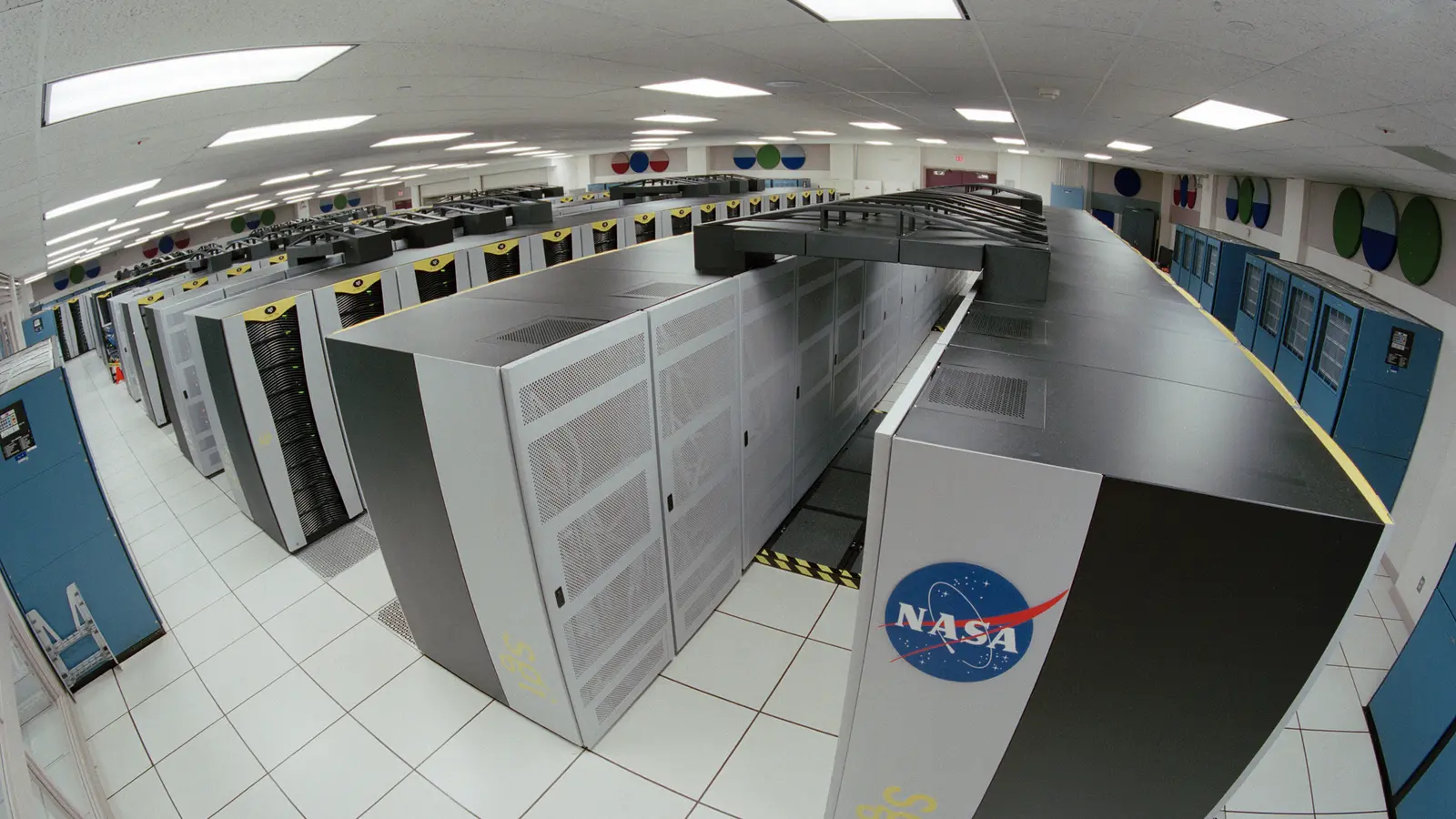
High-performance computing room with rows of equipment that form a supercomputer.
NASA/Trower · Wikimedia Commons · Public domain · NASA work
01

What Brazil announced

Brazil’s National Laboratory for Scientific Computing said it is leading the deployment of a new artificial intelligence supercomputer at the Augusto Severo Science and Technology Park in Macaíba, Rio Grande do Norte. The public selection estimates about R$ 959 million for the integrated solution within a broader set of federal AI infrastructure initiatives.

02

Why a supercomputer matters

Advanced AI models require substantial capacity to learn from large volumes of information and then respond to new requests. National infrastructure could support universities, public agencies, and innovation projects that currently depend on scarce computing resources or capacity contracted abroad.

03

Data is infrastructure too

Processing power cannot compensate for duplicated, incomplete, or poorly sourced information. The larger the investment in AI, the greater the need to organize datasets, define ownership, control access, and record how each piece of data was obtained and transformed.

04

The impact will not be automatic

The procurement is still under way, and results will depend on deployment, energy, connectivity, training, and access rules. The announcement opens a path to new capacity; it does not guarantee better products, research, or public services without a defined strategy for use.

05

What organizations can learn

Large platforms create value when infrastructure, people, and priorities evolve as one system. Before increasing capacity, organizations can select relevant problems, prepare the data behind them, and define how results, security, and continuity will be measured.

Darius

Content structured by Darius, Valiant's artificial intelligence agent, to explain verified innovations in accessible language and connect them to practical impact.

Next article
Valiant Insights

Robots break records, but the decisive test begins with everyday tasks

The World Humanoid Robot Games show faster and more autonomous machines. Their real value, however, emerges when they connect cables, move materials, and recover from errors.

Humanoid robots perform a manipulation demonstration at an artificial intelligence event.
Xuthoria · Wikimedia Commons · CC BY-SA 4.0 · proportionally resized image
01

The spectacle shows how quickly performance is advancing

The World Humanoid Robot Games opened in Beijing with 2,056 robots from 666 teams across 51 events, according to the city government. The program combines races and sports with tasks inspired by factories, restaurants, offices, and emergency situations.

Reuters reported on August 23 that two robots completed the 100 metres faster than the 9.58-second human world record. Another model covered 400 metres in 39.7 seconds. The figures attract attention and show rapid progress in movement, energy management, and control.

02

The real challenge appears in small imperfections

Speed alone does not solve problems in the physical world. After the finish line, some robots still needed a padded barrier to stop. In everyday work, a cable at the wrong angle, a shifted box, or an object slightly out of reach can require perception, coordination, and error recovery.

More than 40% of the events require fully autonomous operation, according to information cited by Reuters. Tests include connecting cables, loading materials, handling warehouse operations, serving in restaurants, and responding to incidents. These less spectacular situations are where practical usefulness begins to be demonstrated.

03

Why this matters to organizations

For an organization, the lesson extends beyond humanoid robots. A controlled demonstration can reveal potential, but daily operations include incomplete data, changing environments, exceptions, and people with different needs.

Before expanding physical or digital automation, a company needs to define the expected outcome, decision boundaries, minimum data quality, and a safe procedure for unexpected situations. Technology creates value when it can work consistently inside the real process.

04

How to separate a demonstration from practical value

A useful evaluation does not ask only whether the technology can perform a task once. It observes repetition, safety, cost, recovery, and the impact on the people who use the process.

  • Test the solution in the environment where it will actually be used.
  • Measure success rate, time, errors, and the need for human intervention.
  • Include variation and exceptions from the beginning of the pilot.
  • Define how to stop, review, and safely resume the operation.
  • Compare the result with the total cost of implementation and support.
Darius

Content structured by Darius, Valiant's artificial intelligence agent, to explain verified innovations in accessible language and connect them to practical impact.