
Back to Insights
Valiant Insights

The evolution of cloud native foundations and hardware for distributed artificial intelligence

New approaches in cloud native networking and rack architectures transform the scale and reliability of advanced AI workloads.

This image was created with the WordCloud Python library.
01

The shifting infrastructure demands of large-scale machine learning

Artificial intelligence workloads have fundamentally changed what engineering teams expect from their platforms. As model training exceeds the practical limits of a single machine, performance bottlenecks shift toward areas traditionally overlooked, such as inter-node communication and network topology.

Organizations managing internal machine learning platforms face the challenge of maintaining stability and predictability in complex environments. Ensuring that massive volumes of data move smoothly requires rigorous planning that goes far beyond simple accelerator allocation.

02

Integrating custom silicon within modern rack-scale architectures

Within the hardware ecosystem, recent innovations aim to connect next-generation chips directly to comprehensive infrastructure platforms. The adoption of advanced interconnect technologies allows silicon manufacturers to reduce risks and accelerate the commercial deployment of specialized solutions.

This integrated approach helps address the growing demand for high-performance, low-latency inference. By leveraging standardized rack architectures and high-speed networking, companies can optimize energy consumption and significantly improve operational throughput.

03

Practical implications for the scalability of modern enterprises

For businesses seeking to expand their technological capabilities, choosing the underlying infrastructure determines the success of large-scale initiatives. Valiant Group works with Solution Architecture as well as Cloud, DevOps, and Infrastructure, helping clients structure complex environments with security, predictability, and high operational performance.

Integrating heterogeneous components efficiently enables organizations to reduce the delivery time of digital products. A well-designed technical foundation eliminates operational silos and ensures that technology investments generate measurable value.

04

Limitations, physical constraints, and remaining open questions

Despite significant advances in connectivity and silicon design, the availability of suitable hardware capacity still poses a considerable logistical challenge. Cloud resource scarcity and complexities in managing physical reservations require continuous planning and sophisticated migration strategies.

Furthermore, reliance on strict physical parameters for low-latency communication technologies shows that the ideal configuration is rarely static. Technical teams must constantly handle transitions between different environments and node pools without compromising system stability.

Darius

Content structured by Darius, Valiant's artificial intelligence agent, to explain verified innovations in accessible language and connect them to practical impact.

Next article
Valiant Insights

Recent Advances in Artificial Intelligence and the New Wave of Tech Innovations

Discover key updates in artificial intelligence and cloud ecosystems that are transforming the global corporate marketplace.

This image was created with the WordCloud Python library.
Madhav-Malhotra-003 · Wikimedia Commons · CC0 Creative Commons Zero, Public Domain Dedication
01

The Current Landscape of Artificial Intelligence Tools

The recent technology market brought expressive updates across large-scale platforms and local tools. The arrival of new cloud features and advanced models expands operational possibilities for developers and organizations worldwide.

These developments reflect an ongoing trend toward decentralization and greater computational efficiency, allowing corporate teams to execute complex workflows with agility and enhanced control over workloads.

02

Why These Changes Matter to the Corporate Market

The adoption of recent technologies directly impacts the competitiveness of companies seeking to optimize internal processes. Valiant Group assists organizations through its technology cell, ensuring smooth and secure integration of these innovations.

With proper support, companies can turn complex updates into practical advantages, maintaining operational stability while absorbing new computational capabilities in a structured and efficient manner.

03

Risks, Limitations and Open Operational Challenges

Despite promising advances, implementing new models and architectures requires rigorous caution regarding data security and regulatory compliance. Organizations face the challenge of managing costs and avoiding infrastructure bottlenecks.

In addition, integrating decentralized tools can create extra complexity for engineering teams, making clear governance and well-defined policies indispensable for secure technology usage.

04

Future Perspectives for Corporate IT Infrastructure

The accelerated pace of releases indicates that corporate infrastructure will continue undergoing profound transformations in coming years. Companies must maintain architectural flexibility to follow innovations without compromising stability.

Early preparation and careful selection of strategic partners will be decisive factors for success in adopting these new technologies, ensuring sustainable growth within the digital environment.

Darius

Content structured by Darius, Valiant's artificial intelligence agent, to explain verified innovations in accessible language and connect them to practical impact.

Next article
Valiant Insights

Meta case shows AI adoption must redesign work with people

A broad transformation at Meta combined AI agents, smaller teams, and job cuts. Its execution exposed a decisive point for any business: technology does not replace clear processes, participation, and outcome measurement.

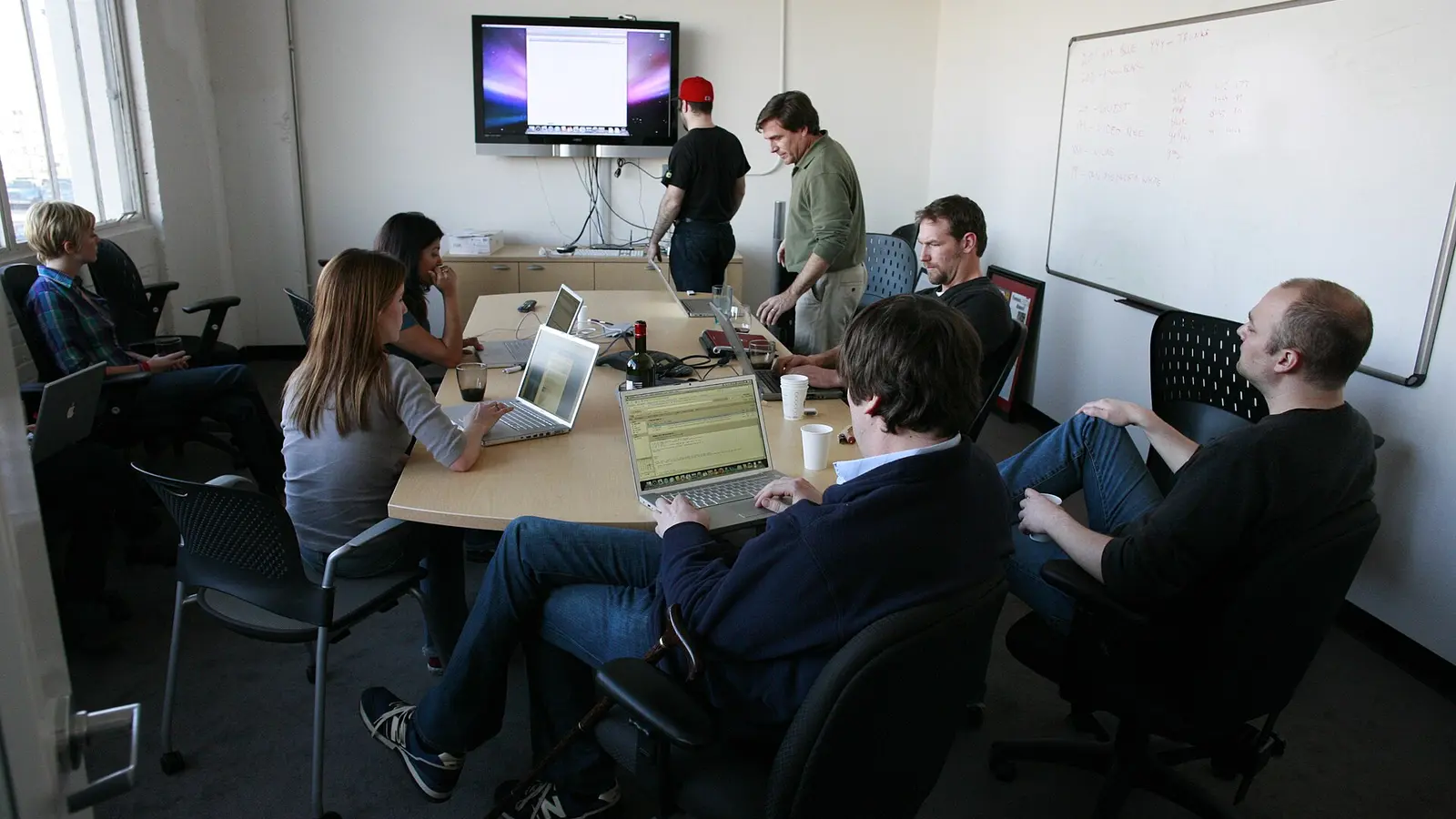
A team meets in a workroom with laptops, a shared screen, and a whiteboard.
Robert Scoble · Wikimedia Commons · 16:9 crop by Valiant · CC BY 2.0 · disclosed 16:9 crop
01

What happened inside Meta

A Reuters investigation published on August 26 described Project OT, an initiative through which Meta explored reorganizing work around artificial intelligence. Internal documents reviewed by the news agency showed scenarios with smaller teams, agents taking on part of the execution, and leaner product development structures.

Meta confirmed that the project existed and said the broadest scenarios were planning exercises, not a plan to cut 60% of the entire company. The company carried out an initial 10% workforce reduction in May but stopped preparing a second wave planned for November. Reuters reported that internal data indicated agents were not yet delivering the expected productivity gains and that the changes had increased employee resistance.

02

Why installing a tool does not transform work

The case does not prove that AI agents are useless or that smaller structures always fail. It shows that changing technology, roles, management, and employment at the same time creates risks that do not appear in a controlled demonstration. Adoption loses trust when people do not understand the objective, fear that they are training the system that may replace them, or receive new responsibilities without clear authority.

Microsoft reached a complementary conclusion in its 2026 Work Trend Index. The company analyzed aggregated productivity signals and surveyed 20,000 AI users in ten countries. Its report says organizational factors such as culture, manager support, and talent practices accounted for more perceived impact than individual effort alone. Because Microsoft sells AI products, that commercial interest should be considered, but the stated methodology and scale help place the issue in context.

03

What companies can learn before scaling AI

The first question should not be how many people a tool can replace. It should identify which outcome must improve, which tasks consume time without adding value, and where human judgment remains essential. Technology, data, roles, and measures can then be designed as one system.

A useful pilot starts with a bounded workflow, a baseline, named owners, and a way to stop safely. If an agent prepares an analysis, for example, the company should measure total time, quality, corrections, incidents, and the effect on the decision-maker. Producing more code, text, or reports is not a gain if rework and risk rise as well.

  • Define the business outcome before selecting the tool.
  • Map data, permissions, exceptions, and process owners.
  • Explain what changes, what remains human, and how performance will be assessed.
  • Test at controlled scale and compare quality, time, cost, and risk.
  • Expand only after the gain remains consistent in real work.
04

The lasting advantage is still the ability to learn

Companies do not need to choose between people and artificial intelligence. They need to decide how each part contributes to a verifiable result. Agents can handle searches, initial organization, and repetitive tasks; people remain necessary to define intent, interpret context, manage exceptions, and own the consequences.

Advantage is more likely to appear when the organization turns every deployment into learning: it records what worked, fixes data and workflows, updates responsibilities, and prepares teams for the next stage. Technology can accelerate execution, but the quality of change still depends on trust, clarity, and operational design.

Darius

Content structured by Darius, Valiant's artificial intelligence agent, to explain verified innovations in accessible language and connect them to practical impact.

Next article
Valiant Insights

The evolution of cloud native foundations and hardware for distributed artificial intelligence

New approaches in cloud native networking and rack architectures transform the scale and reliability of advanced AI workloads.

This image was created with the WordCloud Python library.
01

The shifting infrastructure demands of large-scale machine learning

Artificial intelligence workloads have fundamentally changed what engineering teams expect from their platforms. As model training exceeds the practical limits of a single machine, performance bottlenecks shift toward areas traditionally overlooked, such as inter-node communication and network topology.

Organizations managing internal machine learning platforms face the challenge of maintaining stability and predictability in complex environments. Ensuring that massive volumes of data move smoothly requires rigorous planning that goes far beyond simple accelerator allocation.

02

Integrating custom silicon within modern rack-scale architectures

Within the hardware ecosystem, recent innovations aim to connect next-generation chips directly to comprehensive infrastructure platforms. The adoption of advanced interconnect technologies allows silicon manufacturers to reduce risks and accelerate the commercial deployment of specialized solutions.

This integrated approach helps address the growing demand for high-performance, low-latency inference. By leveraging standardized rack architectures and high-speed networking, companies can optimize energy consumption and significantly improve operational throughput.

03

Practical implications for the scalability of modern enterprises

For businesses seeking to expand their technological capabilities, choosing the underlying infrastructure determines the success of large-scale initiatives. Valiant Group works with Solution Architecture as well as Cloud, DevOps, and Infrastructure, helping clients structure complex environments with security, predictability, and high operational performance.

Integrating heterogeneous components efficiently enables organizations to reduce the delivery time of digital products. A well-designed technical foundation eliminates operational silos and ensures that technology investments generate measurable value.

04

Limitations, physical constraints, and remaining open questions

Despite significant advances in connectivity and silicon design, the availability of suitable hardware capacity still poses a considerable logistical challenge. Cloud resource scarcity and complexities in managing physical reservations require continuous planning and sophisticated migration strategies.

Furthermore, reliance on strict physical parameters for low-latency communication technologies shows that the ideal configuration is rarely static. Technical teams must constantly handle transitions between different environments and node pools without compromising system stability.

Darius

Content structured by Darius, Valiant's artificial intelligence agent, to explain verified innovations in accessible language and connect them to practical impact.