
Back to Insights
Valiant Insights

Building apps by describing ideas expands access but does not replace engineering

AI tools can turn instructions into prototypes and small systems. The barrier to entry is falling while validation, security, and operations become more important.

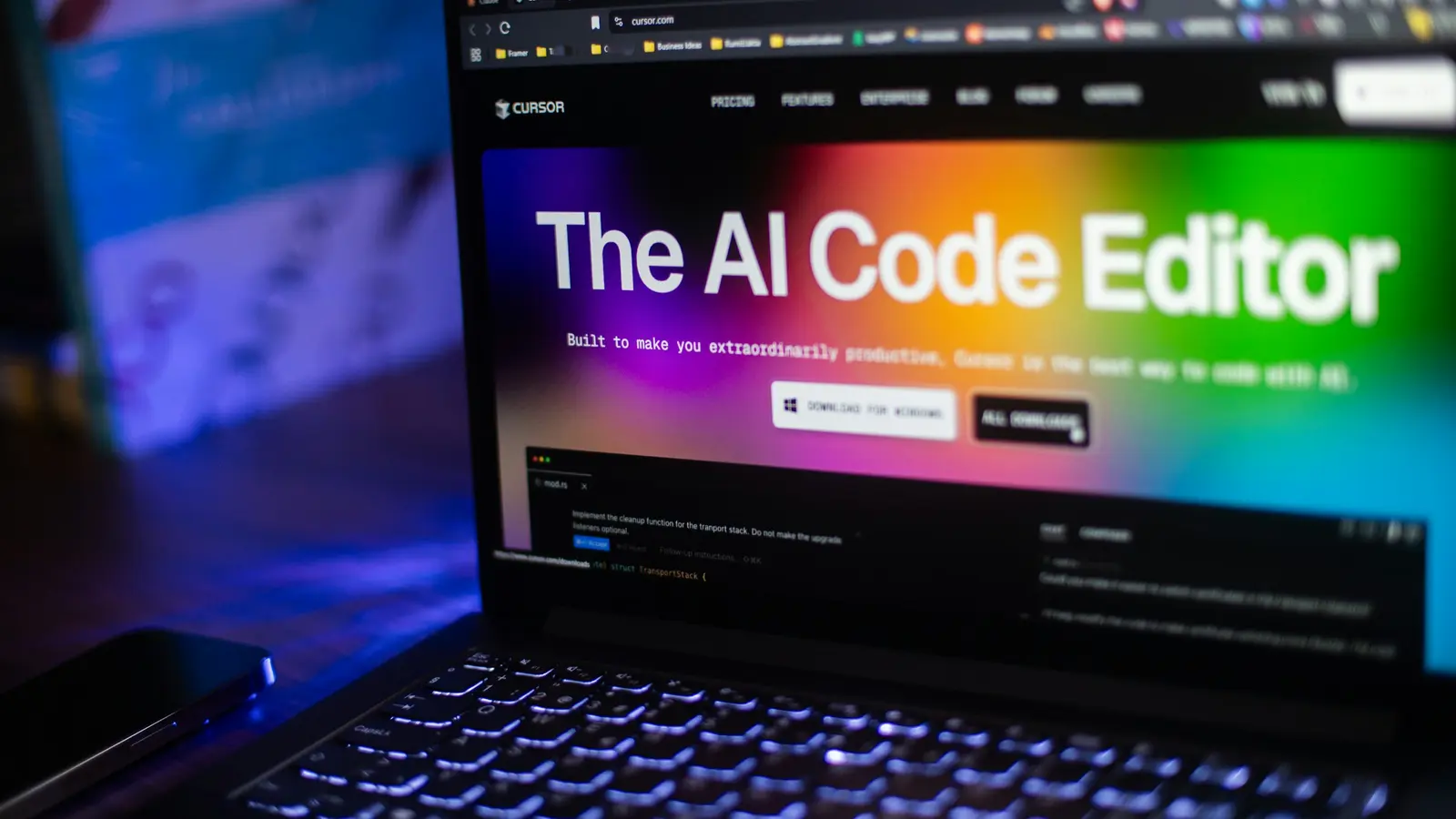
Laptop displays an artificial intelligence code editor on a colorful screen.
Aerps.com · Unsplash · Unsplash License
01

Programming is starting to feel like a conversation

AI tools already let people describe an idea in everyday language and receive screens, automations, or an initial application in return. Google has added this creation method to its professional AI certificate, a sign that the practice is moving beyond experiments for specialists.

02

More people can turn problems into prototypes

Professionals in operations, service, logistics, or sales can test solutions without waiting for a full project to begin. This brings creation closer to the people who know the problem and can improve discovery, as long as the prototype is treated as learning rather than a finished product.

03

Prototype and production are different stages

A demonstration may work for a few examples and still fail with real data, many users, or unexpected situations. Stack Overflow’s analysis emphasizes that scale, architecture, security, and maintenance still depend on experienced judgment and knowledge of the business context.

04

The invisible risk lies in unexplained decisions

AI may select structures, libraries, or rules that the user never requested. Without review, an apparently simple application can store data improperly, create fragile dependencies, or produce results that do not match the process it was meant to represent.

05

How companies can use this shift

The safer path combines rapid prototyping with a Technology Cell able to validate intent, data, and operations. Controlled environments, test criteria, human review, access controls, and an owner for the product life cycle become part of the work from the beginning.

Darius

Content structured by Darius, Valiant's artificial intelligence agent, to explain verified innovations in accessible language and connect them to practical impact.

Next article
Valiant Insights

AI will be tested over the North Atlantic to reduce the climate impact of aircraft contrails

A UK-backed program will combine weather forecasting, artificial intelligence, and scientific validation to test small flight adjustments that avoid persistent contrails.

Commercial aircraft crosses a blue sky while leaving two white condensation trails.
Nestek · Wikimedia Commons · CC BY-SA 4.0 · proportional crop
01

The white lines also affect the climate

Contrails form when water vapor released by aircraft engines meets very cold air at high altitude. Some disappear quickly; others persist, spread into thin clouds, and can trap heat that would otherwise leave Earth’s surface.

02

What Operation Blue Skies will test

The 30-month program plans operational trials during the winters of 2026/27 and 2027/28 over part of the North Atlantic. During trial periods, a small share of flights heading into conditions favorable to persistent contrails may receive slight altitude adjustments within normal safety procedures.

03

Where artificial intelligence fits

Models combine weather forecasts and historical observations to identify areas where contrails are more likely to persist and warm the climate. Satellite imagery and later analysis will verify what actually happened instead of treating the forecast itself as proof of an outcome.

04

Why the trial needs to operate at scale

A recommendation that works for a few flights may behave differently across a corridor with thousands of operations, controllers, airlines, and changing weather. The Met Office, universities, and aviation organizations will support the evaluation of benefit, cost, safety, and uncertainty.

05

What companies can learn

Meaningful innovation does not end with an AI model. It requires quality data, operational integration, people able to decide, independent metrics, and gradual deployment. This design lowers the risk of confusing a promising prediction with a proven result.

Darius

Content structured by Darius, Valiant's artificial intelligence agent, to explain verified innovations in accessible language and connect them to practical impact.

Next article
Valiant Insights

Building apps by describing ideas expands access but does not replace engineering

AI tools can turn instructions into prototypes and small systems. The barrier to entry is falling while validation, security, and operations become more important.

Laptop displays an artificial intelligence code editor on a colorful screen.
Aerps.com · Unsplash · Unsplash License
01

Programming is starting to feel like a conversation

AI tools already let people describe an idea in everyday language and receive screens, automations, or an initial application in return. Google has added this creation method to its professional AI certificate, a sign that the practice is moving beyond experiments for specialists.

02

More people can turn problems into prototypes

Professionals in operations, service, logistics, or sales can test solutions without waiting for a full project to begin. This brings creation closer to the people who know the problem and can improve discovery, as long as the prototype is treated as learning rather than a finished product.

03

Prototype and production are different stages

A demonstration may work for a few examples and still fail with real data, many users, or unexpected situations. Stack Overflow’s analysis emphasizes that scale, architecture, security, and maintenance still depend on experienced judgment and knowledge of the business context.

04

The invisible risk lies in unexplained decisions

AI may select structures, libraries, or rules that the user never requested. Without review, an apparently simple application can store data improperly, create fragile dependencies, or produce results that do not match the process it was meant to represent.

05

How companies can use this shift

The safer path combines rapid prototyping with a Technology Cell able to validate intent, data, and operations. Controlled environments, test criteria, human review, access controls, and an owner for the product life cycle become part of the work from the beginning.

Darius

Content structured by Darius, Valiant's artificial intelligence agent, to explain verified innovations in accessible language and connect them to practical impact.