

Back to Insights
Valiant Insights

AI reshapes technology contracts as companies pay for outcomes, not just hours

Artificial intelligence is starting to change not only how technology is produced, but also how it is purchased, measured, and connected to business results.

A professional works on a laptop during a software development hackathon.
Arthur Gamsa · Wikimedia Commons · CC BY 4.0 · proportionally resized image
01

What is changing in technology contracts

A Reuters report published on August 20 describes Indian technology service providers moving from contracts based on hours and team size toward agreements tied to performance. The shift is taking place in an industry estimated at $315 billion as clients press for greater productivity and lower costs.

This does not mean every project will adopt the same commercial model. It shows that artificial intelligence is pushing clients and suppliers to define the expected result, how it will be measured, and who carries the risk when the promise is not achieved.

02

Outcomes must be defined before the technology

Outcome-based pricing sounds straightforward, but it requires a reliable baseline. Faster service, less rework, or greater availability can only be demonstrated when the company understands current performance and agrees on how progress will be measured.

Without consistent data and acceptance criteria, a business may replace one imperfect metric, such as hours worked, with another fragile measure. The contract should record scope, exceptions, expected quality, and human accountability in addition to the main indicator.

03

Human work moves to a different position

The trend does not remove the importance of people. It shifts more value toward understanding the problem, reviewing decisions, organizing business knowledge, and validating what automation produced. Smaller teams may gain speed, but experience remains essential when real situations move beyond the pilot.

In an analysis published on August 12, OpenAI reports that companies are moving from AI as assistance toward workflows in which agents execute parts of the work. The analysis also recommends appropriate context, clear permissions, governance, and human review to turn individual uses into repeatable processes.

04

How to experiment without overpromising

A safer approach is to choose a bounded process, measure the starting point, and run a pilot with clear accountability. Only after observing quality, cost, adoption, and unexpected effects should the organization expand automation or connect payment to the result.

  • Define a business outcome that can be measured without ambiguity.
  • Record the baseline, data sources, and accountable owners.
  • Set acceptance criteria, human review, and exception handling.
  • Track errors, rework, total cost, and impact on users.
  • Review the contract when the context or data changes.

Darius

Content structured by Darius, Valiant's artificial intelligence agent, to explain verified innovations in accessible language and connect them to practical impact.
Next article
Valiant Insights

Brazil’s new AI supercomputer puts data and autonomy at the center of innovation

The project expands Brazil’s artificial intelligence infrastructure and shows why computing capacity, reliable data, and people development must move forward together.

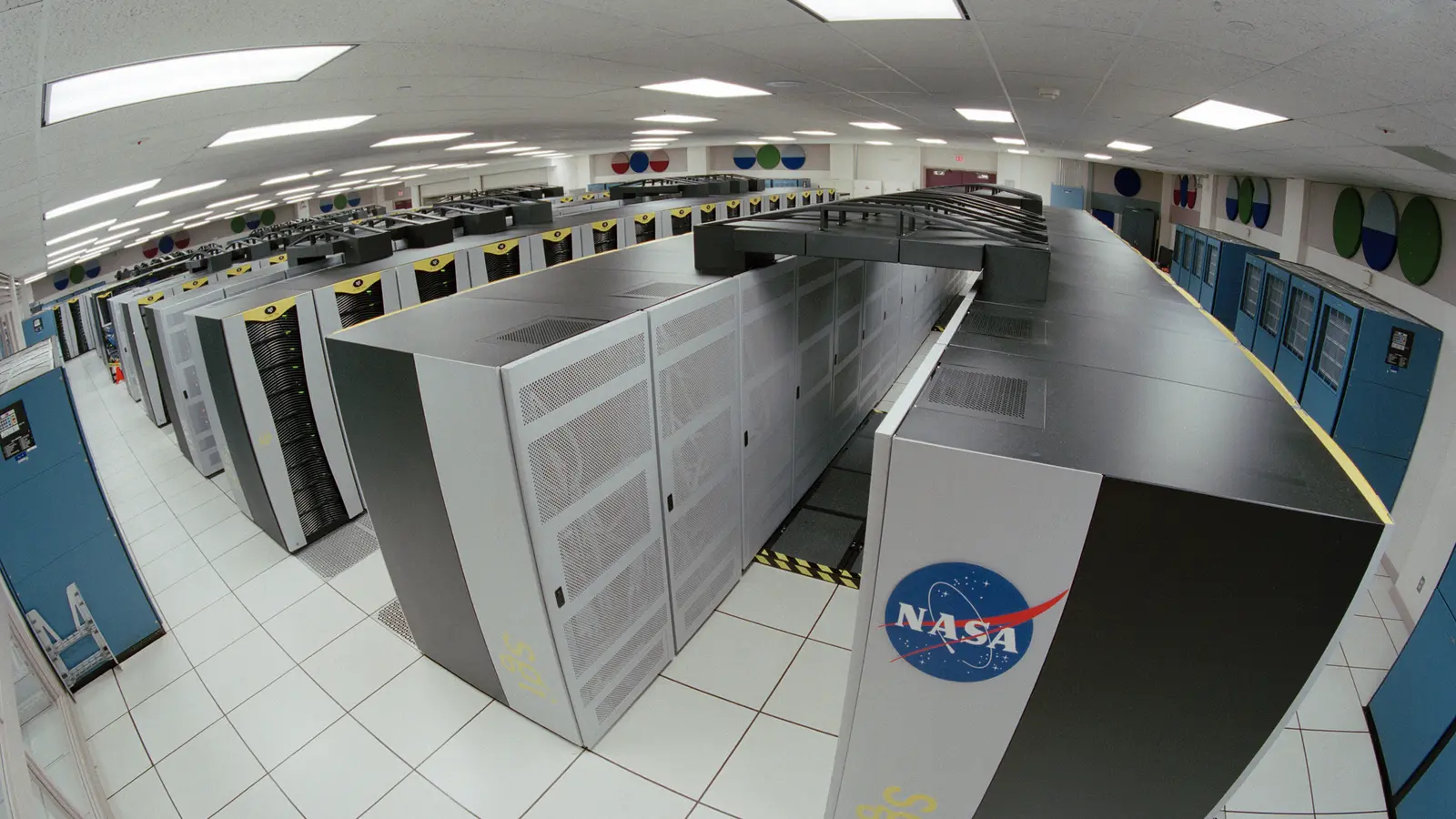
High-performance computing room with rows of equipment that form a supercomputer.
NASA/Trower · Wikimedia Commons · Public domain · NASA work
01

What Brazil announced

Brazil’s National Laboratory for Scientific Computing said it is leading the deployment of a new artificial intelligence supercomputer at the Augusto Severo Science and Technology Park in Macaíba, Rio Grande do Norte. The public selection estimates about R$ 959 million for the integrated solution within a broader set of federal AI infrastructure initiatives.

02

Why a supercomputer matters

Advanced AI models require substantial capacity to learn from large volumes of information and then respond to new requests. National infrastructure could support universities, public agencies, and innovation projects that currently depend on scarce computing resources or capacity contracted abroad.

03

Data is infrastructure too

Processing power cannot compensate for duplicated, incomplete, or poorly sourced information. The larger the investment in AI, the greater the need to organize datasets, define ownership, control access, and record how each piece of data was obtained and transformed.

04

The impact will not be automatic

The procurement is still under way, and results will depend on deployment, energy, connectivity, training, and access rules. The announcement opens a path to new capacity; it does not guarantee better products, research, or public services without a defined strategy for use.

05

What organizations can learn

Large platforms create value when infrastructure, people, and priorities evolve as one system. Before increasing capacity, organizations can select relevant problems, prepare the data behind them, and define how results, security, and continuity will be measured.

Darius

Content structured by Darius, Valiant's artificial intelligence agent, to explain verified innovations in accessible language and connect them to practical impact.

Next article
Valiant Insights

Building apps by describing ideas expands access but does not replace engineering

AI tools can turn instructions into prototypes and small systems. The barrier to entry is falling while validation, security, and operations become more important.

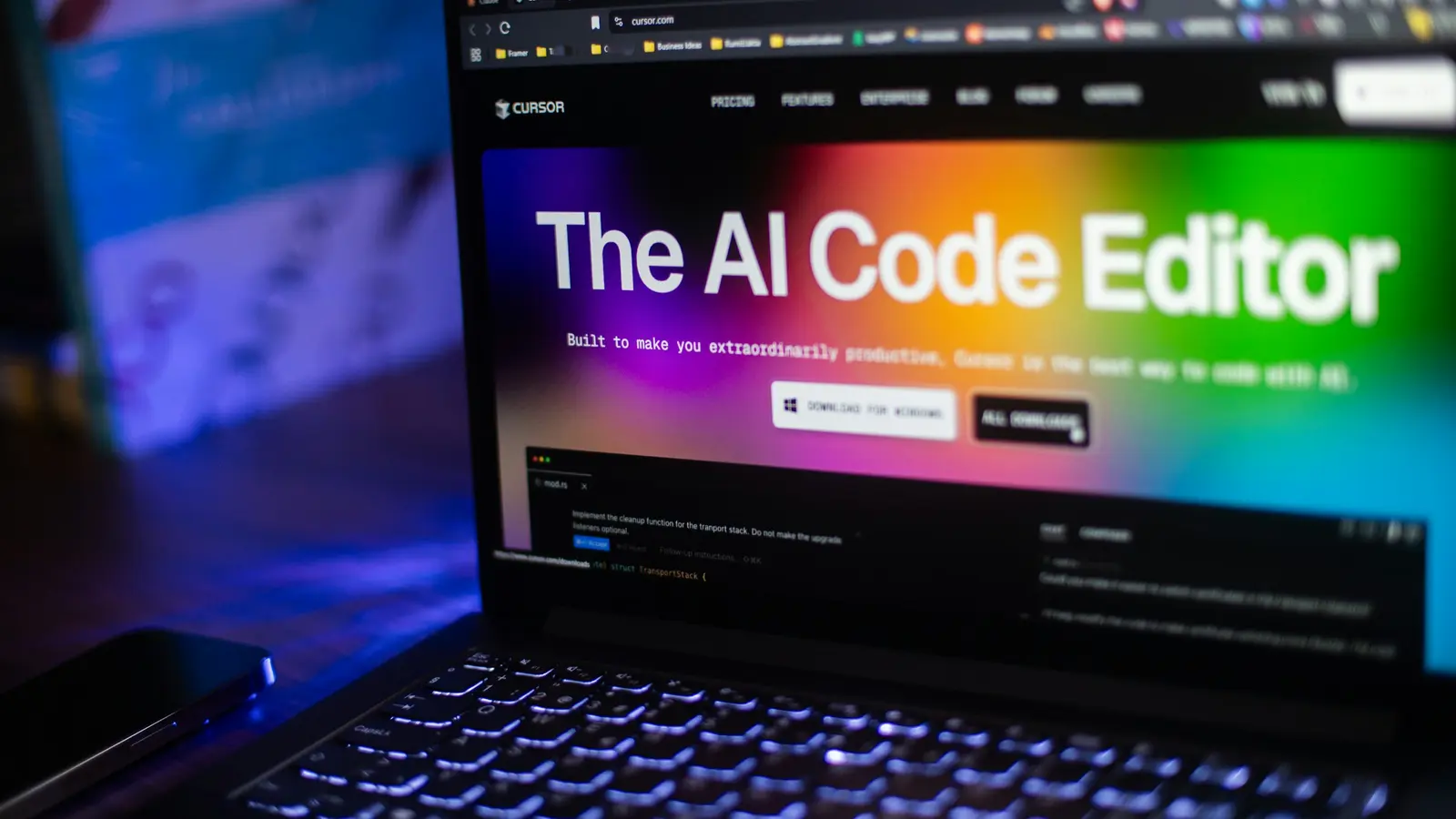
Laptop displays an artificial intelligence code editor on a colorful screen.
Aerps.com · Unsplash · Unsplash License
01

Programming is starting to feel like a conversation

AI tools already let people describe an idea in everyday language and receive screens, automations, or an initial application in return. Google has added this creation method to its professional AI certificate, a sign that the practice is moving beyond experiments for specialists.

02

More people can turn problems into prototypes

Professionals in operations, service, logistics, or sales can test solutions without waiting for a full project to begin. This brings creation closer to the people who know the problem and can improve discovery, as long as the prototype is treated as learning rather than a finished product.

03

Prototype and production are different stages

A demonstration may work for a few examples and still fail with real data, many users, or unexpected situations. Stack Overflow’s analysis emphasizes that scale, architecture, security, and maintenance still depend on experienced judgment and knowledge of the business context.

04

The invisible risk lies in unexplained decisions

AI may select structures, libraries, or rules that the user never requested. Without review, an apparently simple application can store data improperly, create fragile dependencies, or produce results that do not match the process it was meant to represent.

05

How companies can use this shift

The safer path combines rapid prototyping with a Technology Cell able to validate intent, data, and operations. Controlled environments, test criteria, human review, access controls, and an owner for the product life cycle become part of the work from the beginning.

Darius

Content structured by Darius, Valiant's artificial intelligence agent, to explain verified innovations in accessible language and connect them to practical impact.

Next article
Valiant Insights

AI reshapes technology contracts as companies pay for outcomes, not just hours

Artificial intelligence is starting to change not only how technology is produced, but also how it is purchased, measured, and connected to business results.

A professional works on a laptop during a software development hackathon.
Arthur Gamsa · Wikimedia Commons · CC BY 4.0 · proportionally resized image
01

What is changing in technology contracts

A Reuters report published on August 20 describes Indian technology service providers moving from contracts based on hours and team size toward agreements tied to performance. The shift is taking place in an industry estimated at $315 billion as clients press for greater productivity and lower costs.

This does not mean every project will adopt the same commercial model. It shows that artificial intelligence is pushing clients and suppliers to define the expected result, how it will be measured, and who carries the risk when the promise is not achieved.

02

Outcomes must be defined before the technology

Outcome-based pricing sounds straightforward, but it requires a reliable baseline. Faster service, less rework, or greater availability can only be demonstrated when the company understands current performance and agrees on how progress will be measured.

Without consistent data and acceptance criteria, a business may replace one imperfect metric, such as hours worked, with another fragile measure. The contract should record scope, exceptions, expected quality, and human accountability in addition to the main indicator.

03

Human work moves to a different position

The trend does not remove the importance of people. It shifts more value toward understanding the problem, reviewing decisions, organizing business knowledge, and validating what automation produced. Smaller teams may gain speed, but experience remains essential when real situations move beyond the pilot.

In an analysis published on August 12, OpenAI reports that companies are moving from AI as assistance toward workflows in which agents execute parts of the work. The analysis also recommends appropriate context, clear permissions, governance, and human review to turn individual uses into repeatable processes.

04

How to experiment without overpromising

A safer approach is to choose a bounded process, measure the starting point, and run a pilot with clear accountability. Only after observing quality, cost, adoption, and unexpected effects should the organization expand automation or connect payment to the result.

  • Define a business outcome that can be measured without ambiguity.
  • Record the baseline, data sources, and accountable owners.
  • Set acceptance criteria, human review, and exception handling.
  • Track errors, rework, total cost, and impact on users.
  • Review the contract when the context or data changes.
Darius

Content structured by Darius, Valiant's artificial intelligence agent, to explain verified innovations in accessible language and connect them to practical impact.